CARCARETOOL VEHICLE GUIDE

Honda Civic 4D

Honda Civic 4D — 3-door hatchback (1976–1989)4-door sedan (1976–present)2-door coupé (1989–2017)5-door station wagon (1989–2015), A16A1. Explore engine specifications, fuel economy, dimensions, tire sizes, seating, maintenance and tire-pressure guidance.
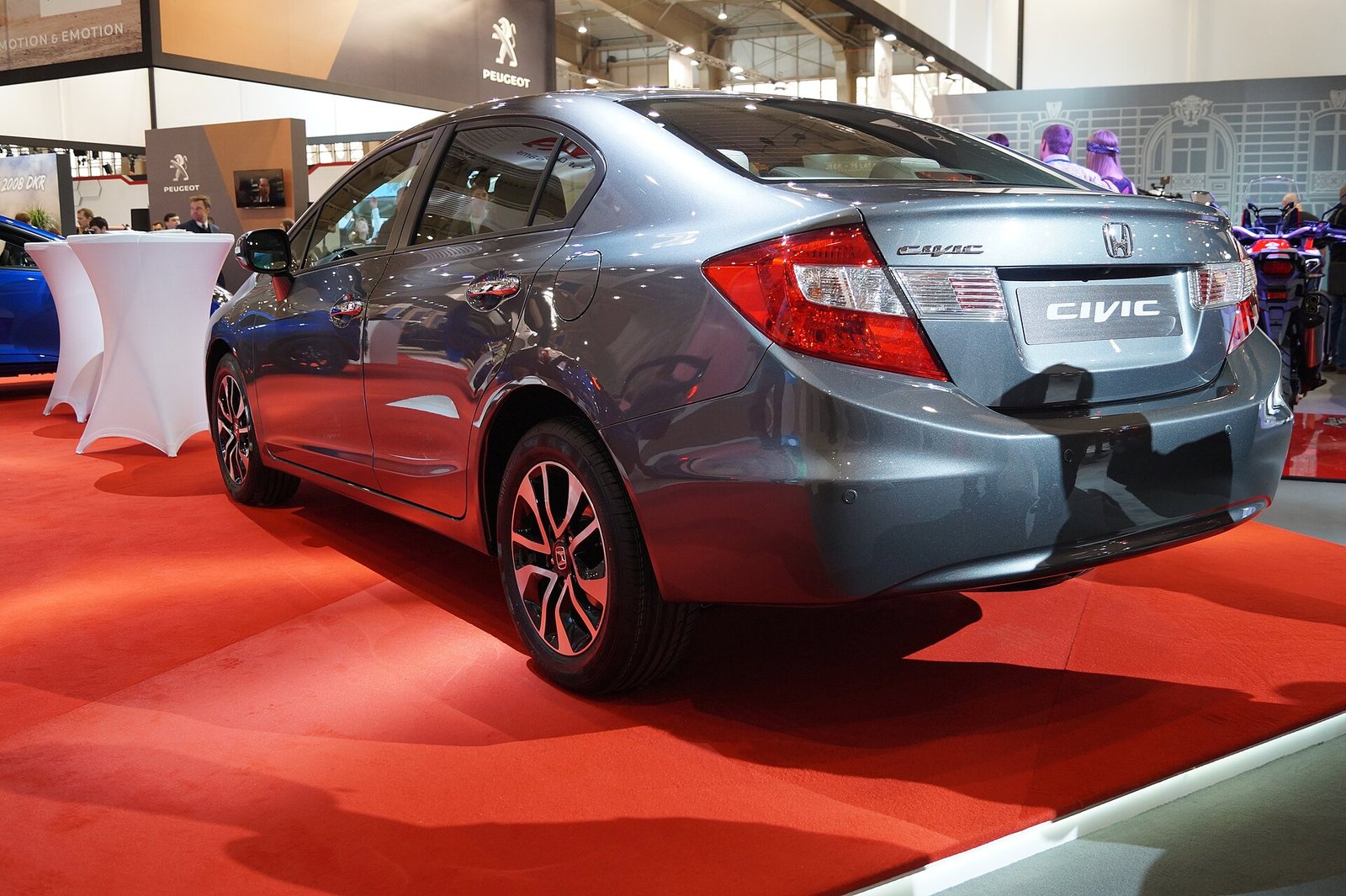
Honda Civic 4D
EngineA16A1

About the Honda Civic 4D

Honda Civic 4D is a 3-door hatchback (1976–1989)4-door sedan (1976–present)2-door coupé (1989–2017)5-door station wagon (1989–2015) in the compact car (1976–1989)mid-size car (1989–present) class. The available vehicle data lists A16A1 as an engine configuration and a Front-engine, front-wheel-drive layout. Public source material describes the model in the context of its design, market positioning and vehicle history.

This Honda Civic 4D guide focuses on the details drivers commonly want to know, including engine information for A16A1. Exact specifications should be matched to the relevant model year and market.

Honda Civic 4D specifications at a glance

Use this table for the model-level essentials. Exact figures may vary by year, trim, engine and market.

Make Honda
Model Civic 4D
Model years Not specified
Body style 3-door hatchback (1976–1989)4-door sedan (1976–present)2-door coupé (1989–2017)5-door station wagon (1989–2015)
Vehicle class Compact car (1976–1989)Mid-size car (1989–present)
Manufacturer Honda
Production 1976–present
Market / country ES, FI, NL

Engine, transmission and performance

Engine information for the Honda Civic 4D includes A16A1.. The listed drivetrain/layout is Front-engine, front-wheel-drive.

Engine A16A1
Drivetrain / layout Front-engine, front-wheel-drive

Honda Civic 4D other specifications

Name Honda Accord
Image 2023 Honda Accord LX, front left, 07-13-2023.jpg
Caption 2023 Honda Accord LX (US)
Alt Front three-quarter view of a front-engined four-door car.

Honda Civic 4D features and equipment

Features shown below are tied to the available source material for this model. Equipment can vary by year, trim and market.

Standard or documented features

It had a very striking exterior design styled by Toshi Oshika in 1983, that resonated well with buyers internationally
Honda's Japanese dealership channel called ''Honda Verno'' all had styling elements that helped identify products only available at ''Honda Verno''
Base model Accords rode on 13-inch steel wheels with wheelcovers with more expensive models having the option of 14-inch alloy wheels
In the Japanese home market, the Accord was available with a full power package, heated mirrors (optional), a digital instrument cluster (optional), sunroof (optional), cruise control, and climate control (which was also optional)
Throughout the different markets, in addition to the sedan model, the Accord was available with different body styles which included a three-door hatchback, a three-door shooting-brake called Accord AeroDeck, and a two-door coupe which was added in 1987 for the 1988 model year
Standard features in the SE-i included leather-trimmed seats and door panel inserts, alloy wheels, power-assisted four-wheel disc brakes, tinted glass
air conditioning, power steering, power windows, power moonroof (sedan only), dual-outlet exhaust, dual body-coloured power mirrors, and a Bose audio system with steering wheel-mounted controls
Additional standard features included cruise control, fold-down rear seat backs, adjustable steering column, quartz digital clock, remote boot release
rear window defroster and intermittent wipers
Two colour combinations were available for the sedan: Charcoal Granite Metallic with gray leather interior trim or Tuscany Taupe Metallic with beige leather interior trim
For the coupe, two different colour combinations were available: Asturias Gray Metallic with gray leather interior trim and Brittany Blue-Green Metallic with beige leather interior trim
In parts of Continental Europe, the Accord five-door station wagon was also called the Accord AeroDeck from 1990 until 2008, when the name of the station wagon was renamed the "Accord Tourer"
Note that the top model in Japan "2.0Si" is to 4w-ALB (4-wheel ABS) is standard equipment (with an option to upgrade in other trim packages)
Moreover, because of the emphasis on aiding rear-seat passenger entry, a longer front door was installed, and because power windows were not installed on the lower trim packages "LX", "LX-S" and as such, the window regulator opening felt heavy
TIRE PRESSURE

Recommended tire pressure for Honda Civic 4D

Check the vehicle placard or owner’s manual for the manufacturer’s cold inflation pressure. CarCareTool estimates are clearly labelled when an exact verified value is unavailable.

Normal load32 PSI front30 PSI rear
Fully loaded34 PSI front33 PSI rear
Load condition Front Rear Status
Normal 32 PSI 30 PSI Estimate
Fully loaded 34 PSI 33 PSI Estimate

Calculate how much air to add

Frequently asked questions about Honda Civic 4D

These FAQs are generated automatically for this specific vehicle from the specifications, features and ownership data available in CarCareTool. Questions are selected by relevance so the page focuses on details that can actually be answered for this model.

What engine does the Honda Civic 4D have?
The available source data lists the Honda Civic 4D engine as A16A1. Engine availability can differ by model year and market.
What tire pressure should I use for the Honda Civic 4D?
For the correct setting, use the cold inflation pressure on the vehicle placard or in the owner’s manual. When CarCareTool does not have a verified configuration-specific value, its starting estimate is 32 PSI front and 30 PSI rear for normal load. This is an estimate, not an OEM recommendation.
What is the best engine oil for the Honda Civic 4D?
There is no single best engine oil for every Honda Civic 4D configuration. Use the viscosity grade and manufacturer approval specified for the exact engine in the owner’s manual.
What body style is the Honda Civic 4D?
The Honda Civic 4D is classified as a 3-door hatchback (1976–1989)4-door sedan (1976–present)2-door coupé (1989–2017)5-door station wagon (1989–2015).
Is the Honda Civic 4D FWD, RWD or AWD?
The listed drivetrain/layout for the Honda Civic 4D is Front-engine, front-wheel-drive.
Who makes the Honda Civic 4D?
The manufacturer listed for the Honda Civic 4D is Honda.
When was the Honda Civic 4D produced?
The available source data describes production as 1976–present.
What class of car is the Honda Civic 4D?
The Honda Civic 4D is listed in the Compact car (1976–1989)Mid-size car (1989–present) class.
Which markets or countries sold the Honda Civic 4D?
The CarCareTool catalog currently associates the Honda Civic 4D with ES, FI, NL. Market availability and specifications can differ.
What replaced the Honda Civic 4D?
The available vehicle data lists a later model or generation as the successor where applicable.
How often should I check the tire pressure on the Honda Civic 4D?
Check the tires regularly and before long trips, with the tires cold. Use the vehicle placard or owner’s manual as the source of the manufacturer’s recommended pressure.
Should I use the tire sidewall pressure for the Honda Civic 4D?
No. The maximum pressure printed on the tire sidewall is not automatically the vehicle’s recommended setting. Use the vehicle placard or owner’s manual for the correct cold inflation pressure.
Does the recommended tire pressure change when the Honda Civic 4D is fully loaded?
It can. Many vehicles specify a different cold pressure for heavier loads. Check the vehicle placard or owner’s manual for the exact loading condition.
Can the Honda Civic 4D have different tire pressures front and rear?
Yes. Some vehicles specify different front and rear pressures because axle loads and vehicle configurations differ. Follow the exact vehicle recommendation where available.
Why can mileage differ from the published figure for the Honda Civic 4D?
Published fuel economy is measured under a defined test method. Real-world mileage can vary with traffic, speed, temperature, tire pressure, payload, maintenance and driving style.

Data sources and verification are available in the page editor; exact specifications can vary by year, market, trim and engine.