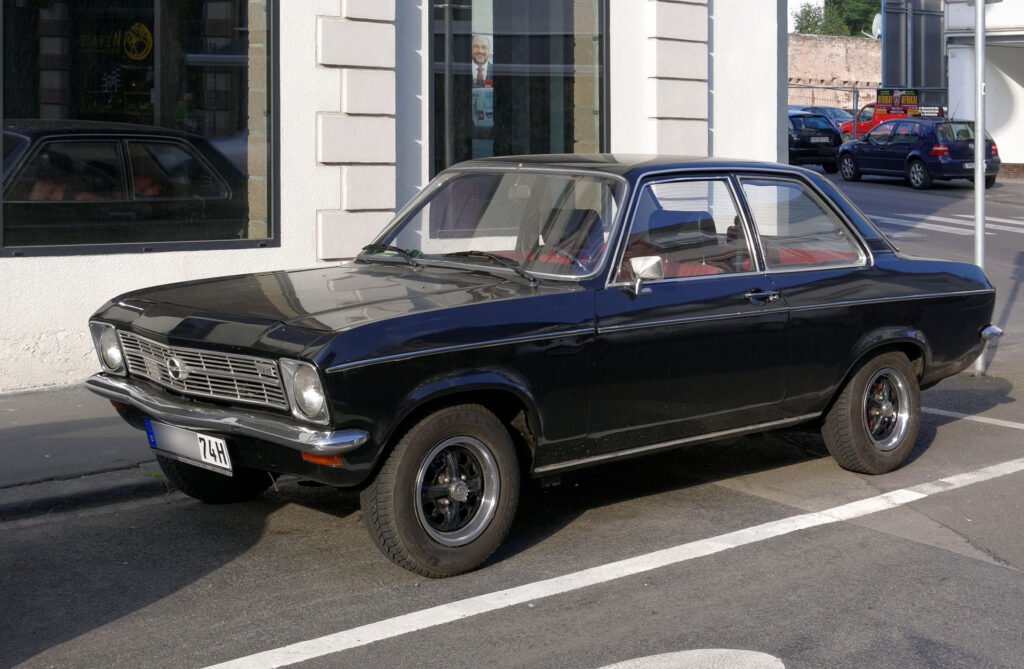
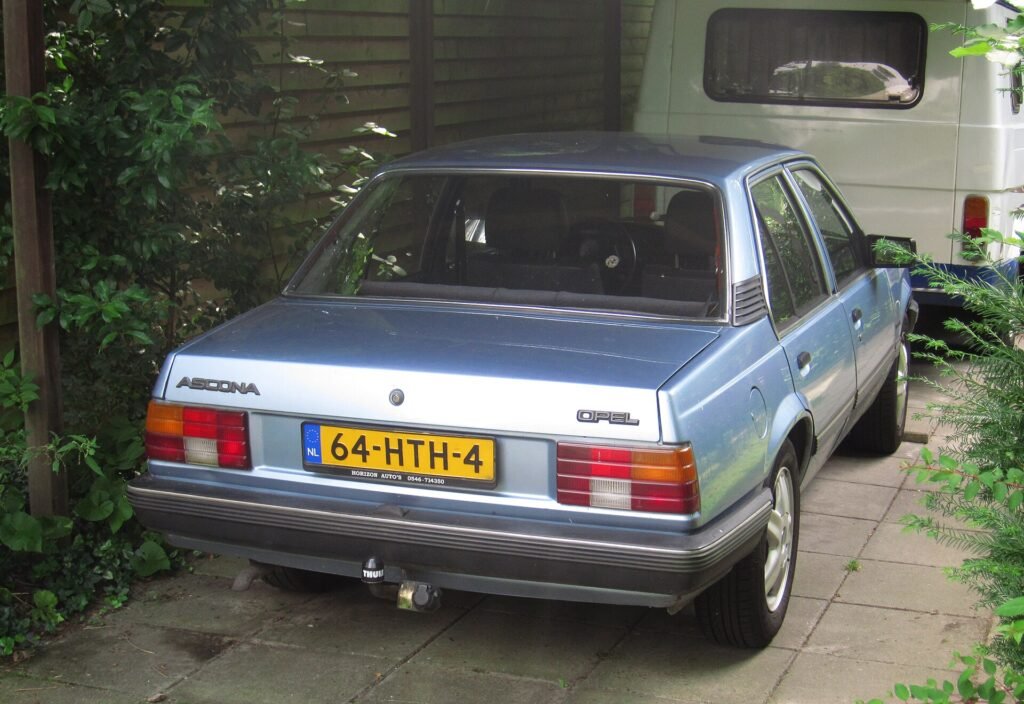
Opel Ascona
Opel Ascona — 2/4-door saloon3-door estate, 1196 cc ''12S'' OHV I4; 1584 cc ''16N/16S'' CIH I4; 1897 cc ''19S'' CIH I4. Explore engine specifications, fuel economy, dimensions, tire sizes, seating, maintenance and tire-pressure guidance.
About the Opel Ascona
Opel Ascona is a 2/4-door saloon3-door estate in the large family car (d) class. The available vehicle data lists 1196 cc ''12S'' OHV I4; 1584 cc ''16N/16S'' CIH I4; 1897 cc ''19S'' CIH I4 as an engine configuration, paired with 4-speed manual; 3-speed automatic and a FR layout layout. Public source material describes the model in the context of its design, market positioning and vehicle history.
This Opel Ascona guide focuses on the details drivers commonly want to know, including engine information for 1196 cc ''12S'' OHV I4; 1584 cc ''16N/16S'' CIH I4; 1897 cc ''19S'' CIH I4 and 4-speed manual; 3-speed automatic transmission information. Exact specifications should be matched to the relevant model year and market.
Opel Ascona specifications at a glance
Use this table for the model-level essentials. Exact figures may vary by year, trim, engine and market.
| Make | Opel |
|---|---|
| Model | Ascona |
| Model years | Not specified |
| Body style | 2/4-door saloon3-door estate |
| Vehicle class | Large family car (D) |
| Manufacturer | Opel (General Motors) |
| Production | 1970–1988 |
| Market / country | ES, FI, GB, LU, NL, NZ, UA |
Engine, transmission and performance
Engine information for the Opel Ascona includes 1196 cc ''12S'' OHV I4; 1584 cc ''16N/16S'' CIH I4; 1897 cc ''19S'' CIH I4.. Transmission information includes 4-speed manual; 3-speed automatic.. The listed drivetrain/layout is FR layout.
| Engine | 1196 cc ''12S'' OHV I4; 1584 cc ''16N/16S'' CIH I4; 1897 cc ''19S'' CIH I4 |
|---|---|
| Transmission | 4-speed manual; 3-speed automatic |
| Drivetrain / layout | FR layout |
Dimensions, weight and practicality
Dimensions and capacity figures are presented as published source data when available.
| Wheelbase | 95.75 in (2,432 mm) |
|---|---|
| Length | 164.5 in (4,178 mm) |
| Width | 64.375 in (1,635 mm) |
| Height | 54.5 in (1,384 mm) |
| Kerb / curb weight | 1050 kg (2,315 lb) (approx) |
Opel Ascona other specifications
| Image | Opel Ascona front 20071115.jpg |
|---|---|
| Name | Opel Ascona |
| Aka | Opel 1900 (USA) |
Opel Ascona generations and model years
Where a source covers multiple generations, CarCareTool selects the generation(s) that best match this catalog model instead of mixing unrelated variants.
| Generation / scope | Years | Engine | Transmission | Drivetrain |
|---|---|---|---|---|
| Opel Ascona | 1970–1988 | Not specified | Not specified | Not specified |
| Ascona A | 1970–1975 | 1196 cc ''12S'' OHV I4; 1584 cc ''16N/16S'' CIH I4; 1897 cc ''19S'' CIH I4 | 4-speed manual; 3-speed automatic | FR layout |
| Ascona B | 1975–1981 | 1196 cc ''12N/12S'' OHV I4; 1297 cc ''13N/13S'' OHC I4; 1584 cc ''16N/16S'' CIH I4; 1897 cc ''19N/19S'' CIH I4; 1979 cc ''20N/20S/20E'' CIH I4; 2420 cc ''400/KAA'' DOHC 16V I4 (Ascona 400); 1998 cc ''20D'' OHC diesel I4 | Not specified | FR layout |
| Ascona C | 1981–19881982–1996 (Brazil) | Not specified | 4/5-speed manual3-speed automatic | FF layout |
Opel Ascona features and equipment
Features shown below are tied to the available source material for this model. Equipment can vary by year, trim and market.
Standard or documented features
Recommended tire pressure for Opel Ascona
Check the vehicle placard or owner’s manual for the manufacturer’s cold inflation pressure. CarCareTool estimates are clearly labelled when an exact verified value is unavailable.
| Load condition | Front | Rear | Status |
|---|---|---|---|
| Normal | 32 PSI | 30 PSI | Estimate |
| Fully loaded | 34 PSI | 33 PSI | Estimate |
Frequently asked questions about Opel Ascona
These FAQs are generated automatically for this specific vehicle from the specifications, features and ownership data available in CarCareTool. Questions are selected by relevance so the page focuses on details that can actually be answered for this model.
What engine does the Opel Ascona have?
What tire pressure should I use for the Opel Ascona?
What is the best engine oil for the Opel Ascona?
What body style is the Opel Ascona?
What are the dimensions of the Opel Ascona?
What transmission does the Opel Ascona have?
Is the Opel Ascona FWD, RWD or AWD?
Who makes the Opel Ascona?
When was the Opel Ascona produced?
How much does the Opel Ascona weigh?
Where was the Opel Ascona built?
What class of car is the Opel Ascona?
What platform does the Opel Ascona use?
Which markets or countries sold the Opel Ascona?
What came after the Opel Ascona?
What cars are related to the Opel Ascona?
How often should I check the tire pressure on the Opel Ascona?
Should I use the tire sidewall pressure for the Opel Ascona?
Does the recommended tire pressure change when the Opel Ascona is fully loaded?
Can the Opel Ascona have different tire pressures front and rear?
Data sources and verification are available in the page editor; exact specifications can vary by year, market, trim and engine.
Opel Ascona images
Vehicle images are shown from the stored source image records when available.